
Blogs
Kali Haldi: What It Actually Is, and What You Are Probably Buying Instead
Oct
People find our website through a spice I almost did not stock.
Last month our little jar of kali haldi turned up in Google results five thousand times. Hundred plus people clicked. For a long while I could not work out why so many were looking and so few were interested.
Then I started reading what they were actually typing. Is it real. What does it cost. Is it the same as haldi. Is it the thing my grandmother kept wrapped in cloth in the puja room. Nobody answers these straight, so let me try.
Kali haldi is not dark haldi
This is the first thing to get right, because most listings online get it wrong.
The yellow haldi in your kitchen is Curcuma longa. Kali haldi is Curcuma caesia. Two different species in the same family, the way a lemon and an orange are both citrus and nobody mixes them up. Kali haldi is not turmeric that has been aged, or roasted, or grown in darker soil. It is a different plant.
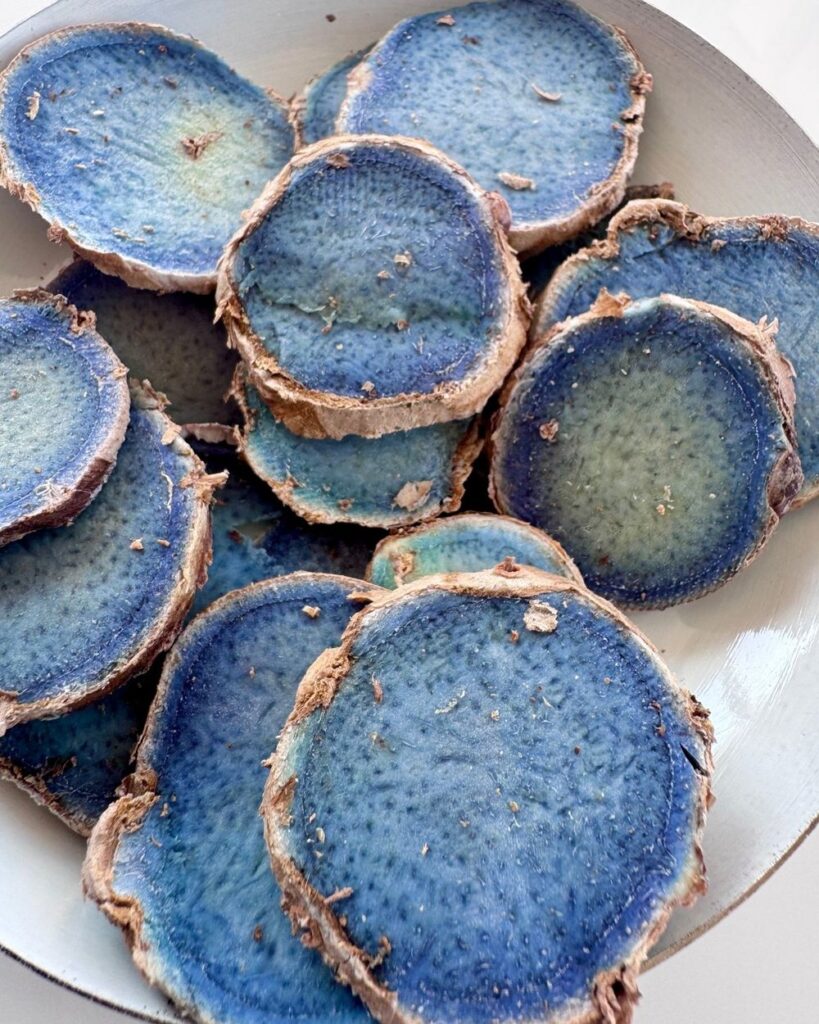
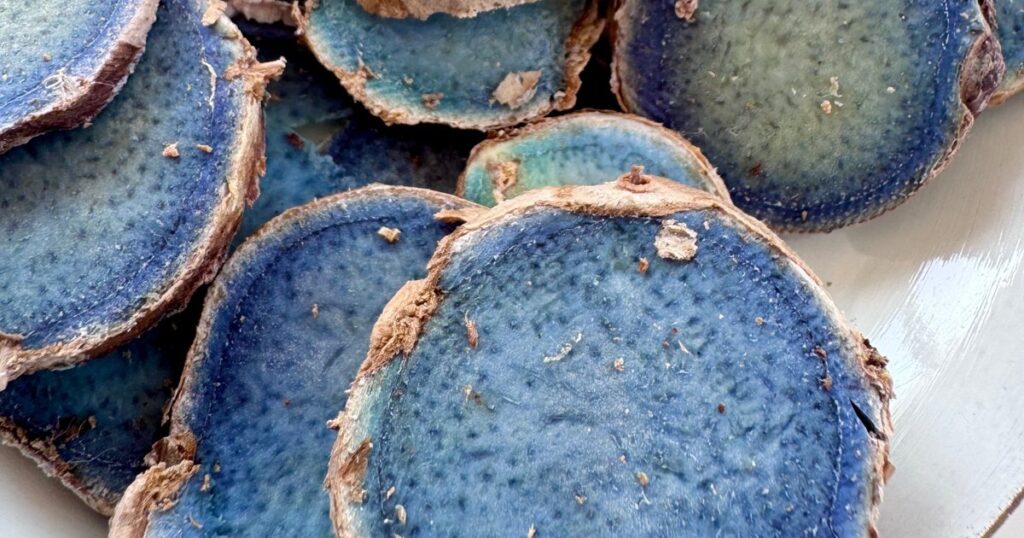
Cut one open and the flesh is blue… a proper indigo, darkest near the skin and paler, almost green, towards the centre. The photo above is from our own batch.. The smell reaches you before the knife is through. Camphorous, sharp, more medicine cabinet than masala dabba, with a bitterness that sits on the tongue afterwards.
Much of what is sold as kali haldi is not kali haldi
Search for it and the same thing comes up under four or five names. Nar kachur. Kachur. Zedoary root. Amba haldi. Black turmeric.
Those are not synonyms. Zedoary is Curcuma zedoaria, sometimes sold as white turmeric. Amba haldi is Curcuma amada, mango ginger, and it smells of raw mango. Both are good plants. Both are easier to find and cheaper than Curcuma caesia. Both get sold as kali haldi all the time.
I do not think most of this is deliberate. Kali haldi is really hard to source, the local names overlap, and after a rhizome has passed through three traders nobody remembers what was actually dug out of the ground. The result is the same for you though. You pay for one thing and get another.
What it should cost
This is the question people search most, so let me answer it properly.
Kali haldi is not farmed the way turmeric is farmed. It grows in pockets of eastern and northeastern India, and most of what reaches the market is gathered in small quantities rather than harvested off plantations. Small supply, scattered collection, no scale anywhere along the chain.
Then there is the maths nobody bothers to explain. Fresh rhizome and dried powder are not the same product, so comparing their prices tells you nothing. Turmeric loses around four fifths of its weight as it dries. A kilo of fresh rhizome leaves you with roughly two hundred grams of powder, before anyone has been paid to clean it, dry it or grind it.
So when a fresh price and a powder price look wildly apart, they are often the same cost wearing different clothes. And a very cheap powder should worry you rather than please you. At some of the prices listed online the sums simply do not work unless something else is in the jar.
What people mean when they say it cures everything
Search for kali haldi benefits and you will be told it helps with asthma, wounds, inflammation, digestion, infections and a dozen other things. The Ayurvedic practitioners I have spoken to talk about it in similar terms, as a magical herb that does a little of everything, mainly due to its Antioxidant, Antibacterial and Anti-inflammatory properties. It has been used this way for a very long time.
So when a herb is described as working for almost everything, it is usually because it has been used for a long time, in many ways, by Ayurvedic practitioners who trusted it.
Good to know
Two things that you will not find on a page selling kali haldi.
The first. People assume black turmeric has higher curcumin content than yellow turmeric. It is not true for all varieties of turmeric. If curcumin is what you are after, our Lakadong haldi is the right product and this one is not.
The second, this is a spice for pinches, not spoonfuls, and is not for kids.
How we actually use it
Sparingly. Less than you would think.
A quarter teaspoon stirred into a glass of warm water. This is the way we find works best. The same amount in warm milk with a little honey is good too. A pinch in kadha with saunth and kali mirch is also fine. Occasionally a very small amount in cooking, where it sits underneath everything else and gives an earthy, camphorous depth.
Start smaller than you expect to. The bitterness is real and it does not cook away. Fifty grams lasts most households a month, which is why we pack that size and not more.
How to check what you have
Four things.
Colour. The dried powder is much paler, grey or greyish beige.
Smell. Camphorous and unmistakable the moment the jar opens. If it smells faintly of ordinary haldi, or of raw mango, you have something else.
Taste. Bitter, resinous, pleasantly strange. If it tastes of not much, it is probably filler.
And the seller. Ask where it came from. Not a region the size of a state, an actual place. If nobody in the chain knows, that tells you how many hands it went through.
Ours
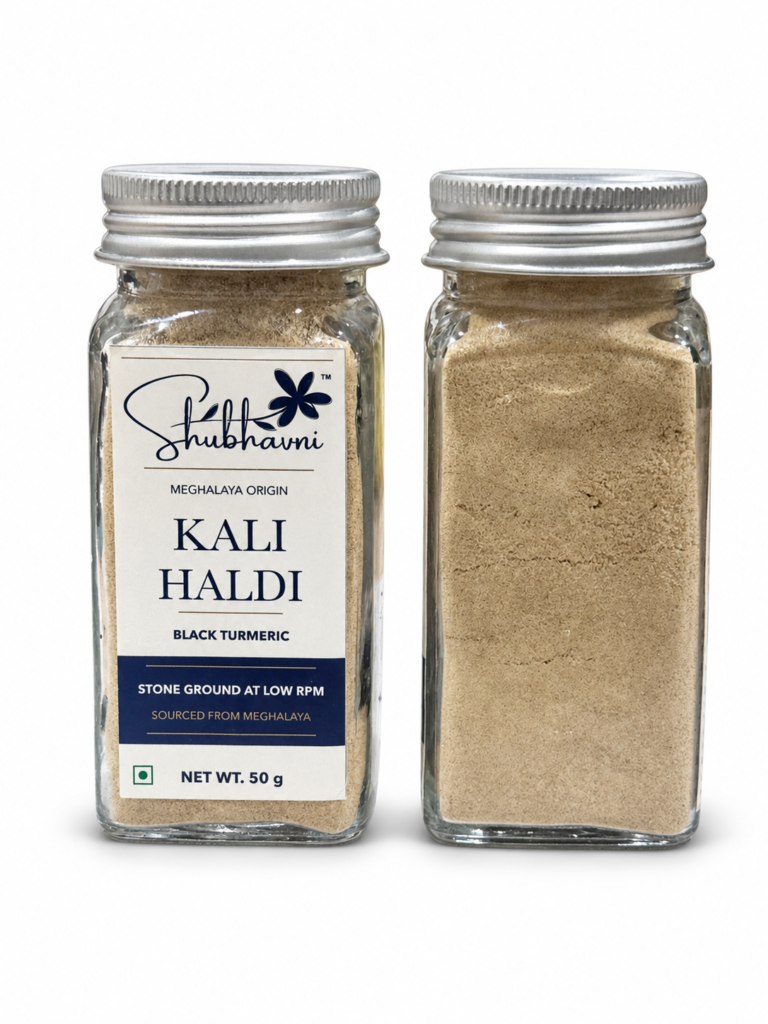
Comes from Meghalaya, gathered in small quantities. We stone grind it slowly so the heat does not carry off the volatile oils that make it what it is, with stainless steel contact surfaces so there is no iron pickup. It goes into glass, not plastic.
A small jar of an unusual spice, honestly described. Not a remedy but pure Black turmeric powder. If that is what you came for, it is here.
Kali Haldi from Meghalaya
Curcuma caesia, stone ground at low RPM and packed in a 50 g glass jar. One species, named, with the origin stated.
