
Ground slowly, because speed destroys spice
A commercial spice grinder runs fast, and fast means hot. Heat drives off the volatile oils that carry aroma and flavour, and degrades the compounds people buy spices for in the first place. It is why supermarket haldi smells of almost nothing.
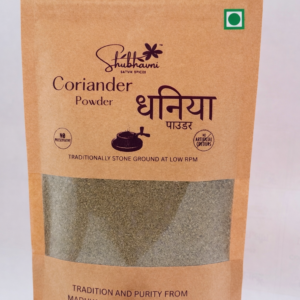
We grind at low RPM on stone. It is slower, the yield is lower, and it costs more. It is also the only way the powder arrives still smelling like the spice it came from.
- Lakadong turmeric from the Jaintia Hills, Meghalaya — the highest-curcumin turmeric grown in India.
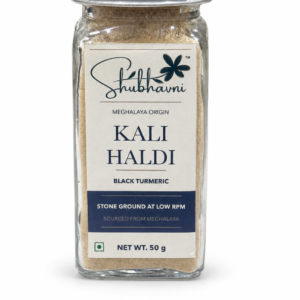
- Kali Haldi, rare black turmeric, also from Meghalaya.
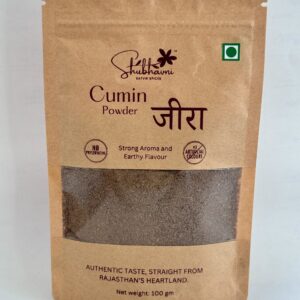
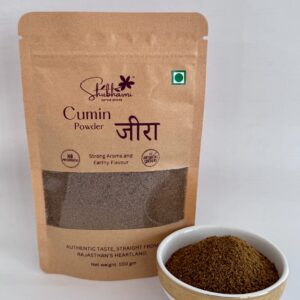
- Jeera from Rajasthan.
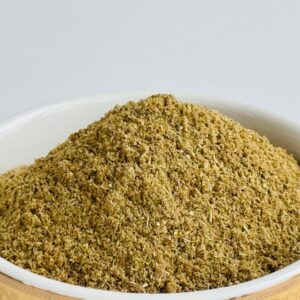
- Dhaniya from Madhya Pradesh.
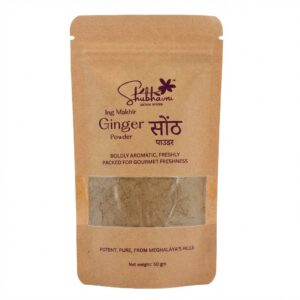
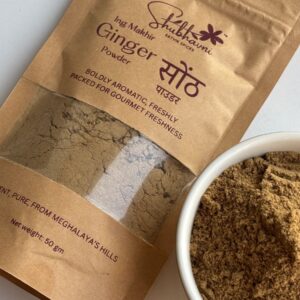
- Saunth from Ingmákhir ginger, grown in the Khasi hills and sun-dried before grinding.
How we grind
- Low RPM, on stone. Minimal heat, so the essential oils stay in the powder instead of evaporating during grinding.
- Stainless steel throughout. No iron contact, so no metallic contamination and no dulling of colour.
- Nothing added. No colour, no starch, no husk used as filler, no anti-caking agents.
- Glass jars with batch number, packing date and FSSAI licence printed on every one.
What adulterated spice powder usually contains
- Turmeric: lead chromate for colour, chalk and rice flour for weight.
- Chilli: brick powder, artificial red dye, ground husk for bulk.
- Coriander: dried stalk and sawdust.
- Cumin: grass seed dyed and polished with charcoal.
None of it is visible once it is powder. That is the point of powder, and it is why we print the batch number and publish our lab reports.


Price range: ₹160.00 through ₹280.00
This product has multiple variants. The options may be chosen on the product page 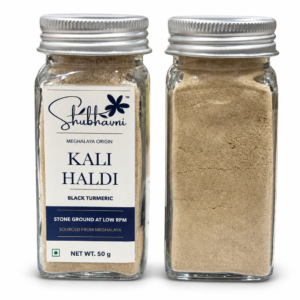
Price range: ₹80.00 through ₹150.00
This product has multiple variants. The options may be chosen on the product page